Virtual Lab & STEM Education Blog | WhimsyLabs

Expert insights on virtual laboratories, AI-powered learning, and innovative STEM education. Discover research-backed strategies and practical guides for science educators.

All Blog Posts

Neue VR-Studie: Technologie ohne Pädagogik reicht nicht

Eine Studie in Frontiers in Virtual Reality begleitete den semesterlangen VR-Einsatz in der Neuroanatomie. Das Ergebnis? Die Lehrkraft verstand das Potenzial von VR, aber es fehlte ihr an pädagogischem Wissen. Hier erfahren Sie, was virtuelle Labore wirklich brauchen, um zu funktionieren.

Most research on virtual reality in education looks at short bursts: a 20-minute intervention here, a one-hour session there. These snapshots tell us whether students find VR engaging (they usually do) and whether they remember content immediately afterward (they usually do). But what happens when VR becomes a regular part of a course, week after week, for an entire semester?

A new study published in Frontiers in Virtual Reality (Wu, Klassen & White, 2026) answers that question with a semester-long ethnographic study of VR in undergraduate neuroanatomy. The findings are illuminating, and for anyone building or purchasing educational technology, they carry an important message: having impressive technology is not enough.

Continue reading "Neue VR-Studie: Technologie ohne Pädagogik reic..." →

Die Kritiker haben Recht: Die meiste Bildungstechnologie ist nutzlos

US-Schulen gaben 2024 30 Milliarden Dollar für EdTech aus. Kritiker sagen, es sei verschwendet. Sie haben Recht, was passive Bildschirmzeit betrifft. Aber ein virtuelles Labor, in dem Schüler tatsächlich Wissenschaft BETREIBEN? Das ist eine andere Geschichte.

"Is education technology mostly useless?" asks The Economist. "Kids Spend Hours in School on Screens. And for What?" echoes Bloomberg.

Ouch.

Continue reading "Die Kritiker haben Recht: Die meiste Bildungste..." →
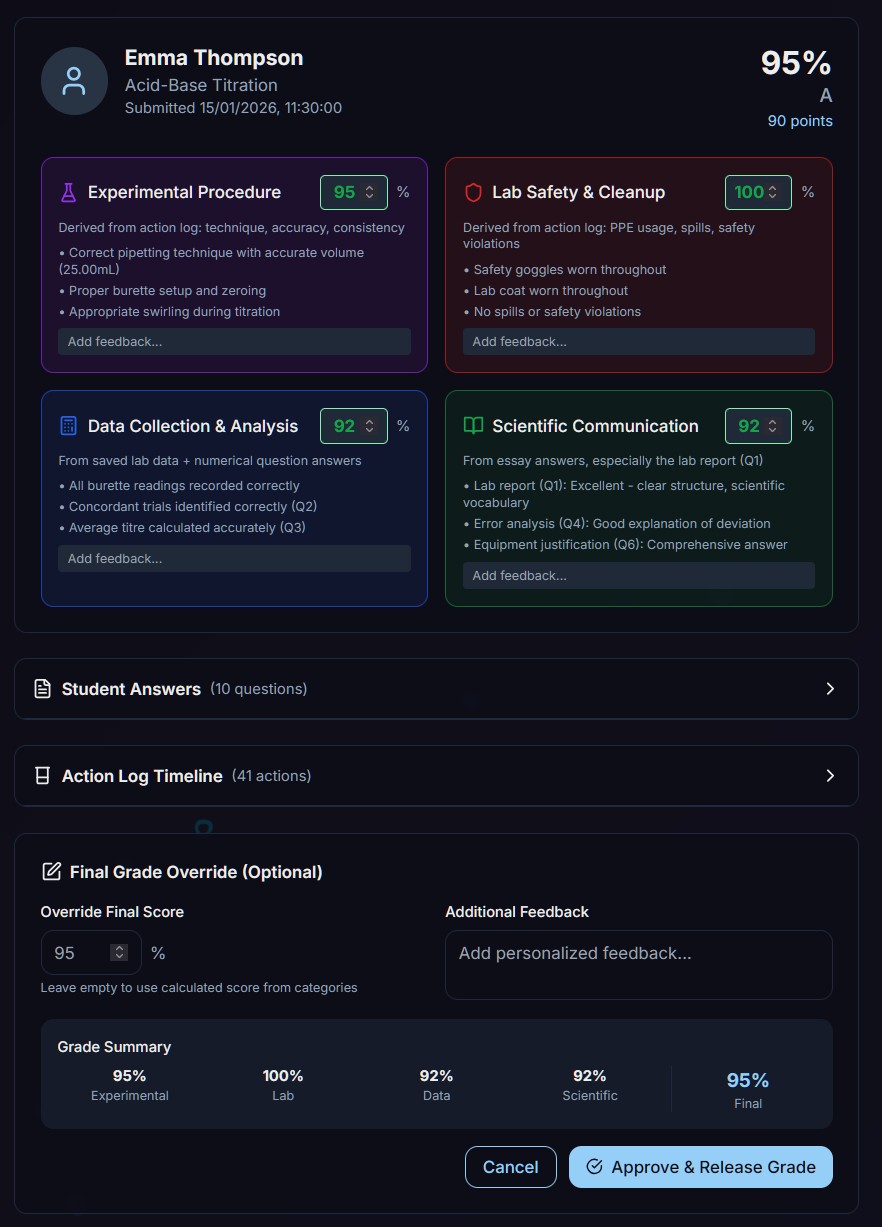
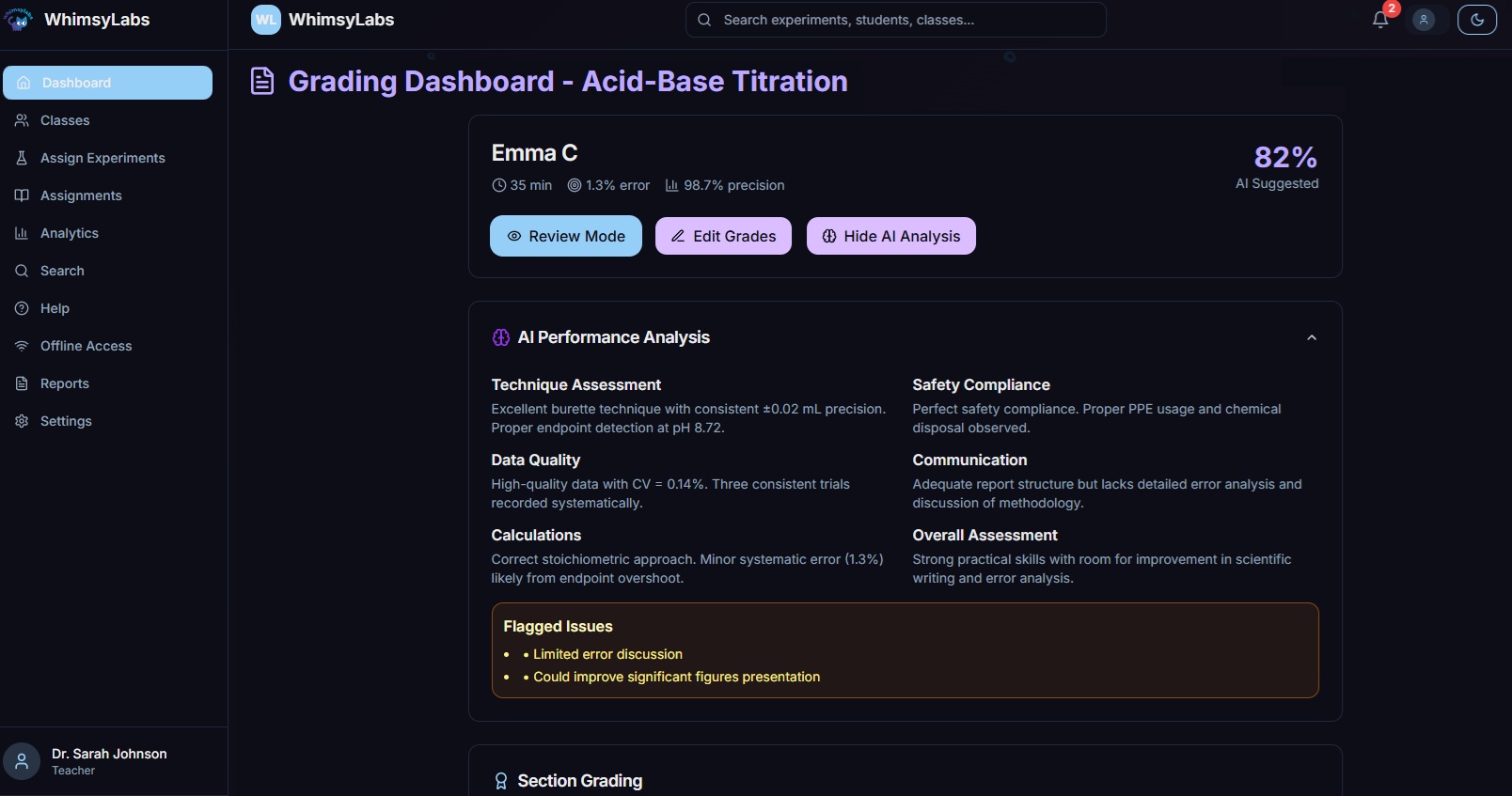
Teacher grading dashboard showing AI assessment overview and audit trail

Bewertung im KI-Zeitalter: Unser Pearson-Webinar

Dr. Marisa French spricht beim Webinar der Immersive Practitioners' Community von Pearson am 26. Februar 2026. Erfahren Sie, wie VR prozessorientierte Bewertungen ermöglicht, die KI-Betrug irrelevant machen.

AI cheating has become the defining headache of modern education. Students use ChatGPT to write essays. They use Wolfram Alpha to solve maths problems. They use any number of tools to generate work that looks like theirs but isn't. And teachers are exhausted.

Continue reading "Bewertung im KI-Zeitalter: Unser Pearson-Webinar" →
Students from diverse schools using WhimsyLabs virtual science lab

Premium-Naturwissenschaftsunterricht für jede Schule zugänglich machen

Premium-EdTech sollte nicht nur wohlhabenden Schulen vorbehalten sein. Erfahren Sie, wie Fördermittel und Zuschüsse physikgenaue virtuelle Labore in jeden Klassenraum bringen können.

There's a pattern in educational technology that bothers us. The best tools tend to end up in schools that already have the most resources. Private schools with generous budgets get cutting-edge VR labs. State schools in affluent areas secure parent-funded extras. And everyone else? They make do with whatever's left in the budget.

Continue reading "Premium-Naturwissenschaftsunterricht für jede S..." →

Virtuelles Physiklabor: Simulationen, die wirklich lehren

Warum Physik einzigartig für Simulation geeignet ist, was schlechte Physiksimulationen schädlich macht und wie eine physikalisch akkurate Engine das Lernen transformiert.

Physics has a reputation as one of the harder sciences. Abstract concepts, invisible forces, equations that seem disconnected from reality. Yet physics is also the science most perfectly suited to computer simulation. When a simulation engine gets the physics right, students don't just learn about Newton's laws. They experience them.

The problem is that most physics simulations don't get it right. And when they get it wrong, students learn the wrong intuitions. That's worse than not using simulations at all.

Continue reading "Virtuelles Physiklabor: Simulationen, die wirkl..." →

Virtuelles Biologielabor: Sezieren, Mikroskopie und mehr

Virtuelle Biologielabore bieten unbegrenzte Sezierübungen, perfekte Mikroskopie-Präparate und Zugänglichkeit für alle Schüler. Erfahren Sie, wie virtuelle Praktika die echte Laborarbeit ergänzen und verbessern.

Biology teachers face a unique set of challenges that physics and chemistry colleagues simply don't encounter. When you're teaching about the circulatory system, you can't just draw a diagram on the board and call it a day. Students need to see the structures, understand the spatial relationships, and ideally get their hands on real tissue. But that's where things get complicated.

The frog you ordered arrived decomposed. Half your class is too squeamish to touch it anyway. Your microscope slides are scratched, the bulbs keep blowing, and you've got exactly 45 minutes to help 30 students understand kidney structure before the bell rings. Sound familiar?

Continue reading "Virtuelles Biologielabor: Sezieren, Mikroskopie..." →
WhimsyCat AI tutor helping a student in a virtual science lab

KI-Tutoren im Naturwissenschaftsunterricht: Was Funktioniert

Ein realistischer Blick auf das, was KI-Tutoren im naturwissenschaftlichen Unterricht leisten können und was nicht. Erfahren Sie, wie WhimsyCat Technik beobachtet, Frustration erkennt und Lehrkräfte unterstützt.

If you've been to any education conference in the past two years, you've heard the pitch. AI tutors will revolutionise learning. Every student will have a personal tutor. Achievement gaps will close. Teachers will be freed from drudgery to focus on what matters.

Continue reading "KI-Tutoren im Naturwissenschaftsunterricht: Was..." →
Teacher and students using virtual lab software on tablets and computers

Virtuelle Labore in der Hochschulbildung: Kaufratgeber 2026

Ein umfassender Einkaufsleitfaden für virtuelle Laborsoftware 2026. Vergleichen Sie Lösungstypen, Bewertungskriterien und lernen Sie, wie Sie den Business Case für die Führungsebene erstellen.

The virtual lab software market has transformed dramatically over the past five years. What began as a pandemic necessity has matured into a sophisticated sector with genuine pedagogical benefits that extend well beyond emergency remote learning.

Continue reading "Virtuelle Labore in der Hochschulbildung: Kaufr..." →
Student performing a virtual titration in WhimsyLabs chemistry simulation

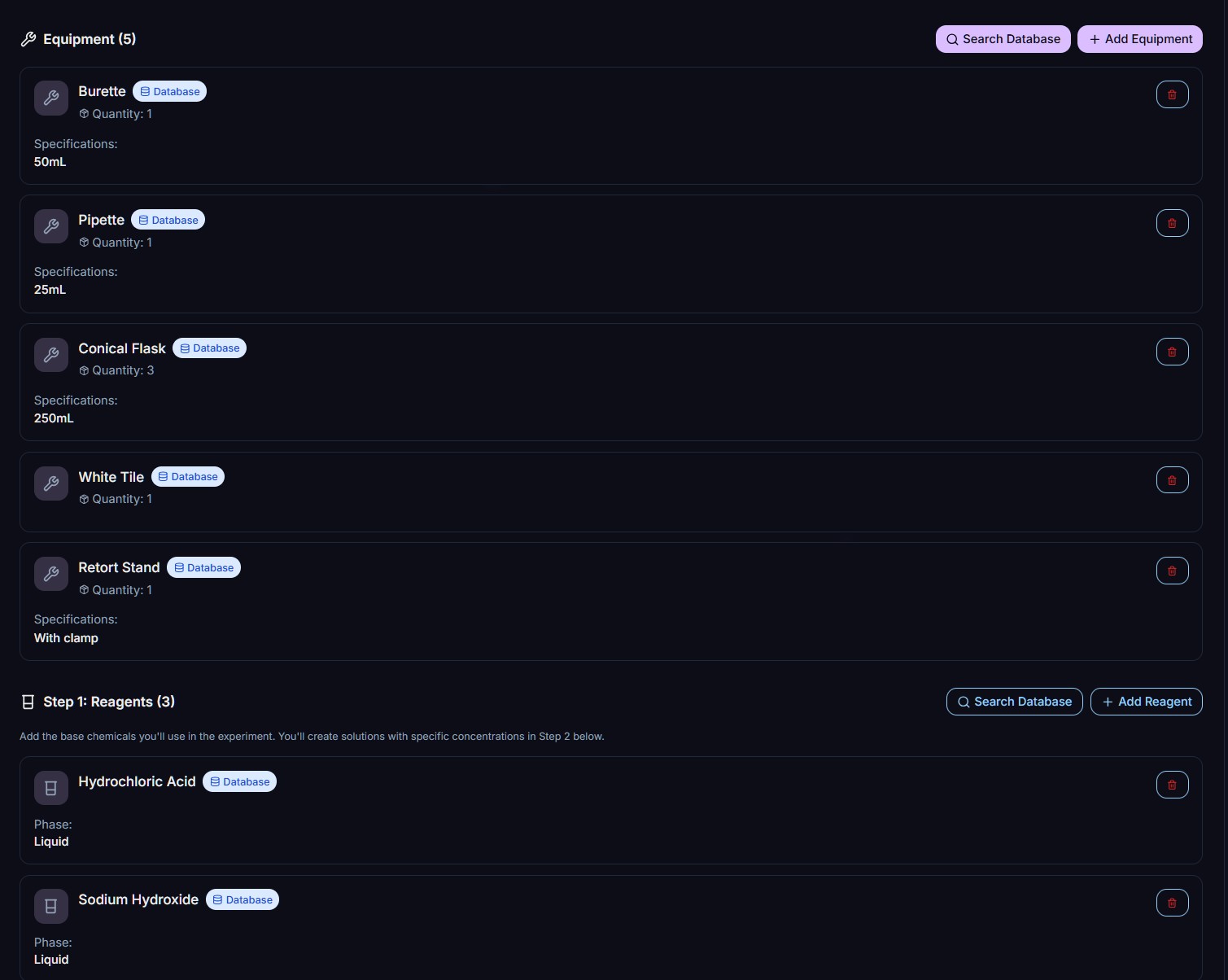
Virtuelles Chemielabor: Ein vollständiger Leitfaden für Lehrkräfte

Ein praktischer Leitfaden für Chemielehrer zur Integration virtueller Labore in Ihren Lehrplan. Behandelt Titrationen, gefährliche Reaktionen und wie Schüler sich mit Simulationen vertraut machen.

You're a chemistry teacher. You know that practical work is essential for understanding. You also know the reality: limited lab time, expensive consumables, safety concerns, and thirty students who need individual attention you can't always give. Virtual chemistry labs won't solve all of that. But they can help more than you might expect.

Continue reading "Virtuelles Chemielabor: Ein vollständiger Leitf..." →
Teacher evaluating virtual lab software options on laptop

Virtuelle Laborsoftware für Sekundarschulen: Ein Kaufratgeber

Ein praktischer Einkaufsführer für Schulentscheider. Erfahren Sie, welche Funktionen bei virtueller Laborsoftware wichtig sind und welche Fragen Sie Anbietern stellen sollten.

Virtual lab software is no longer a nice-to-have. It's becoming essential infrastructure for science departments. But with dozens of options on the market, how do you choose the right one?

Continue reading "Virtuelle Laborsoftware für Sekundarschulen: Ei..." →
Science teacher using WhimsyLabs custom experiment designer on tablet

Lehrkräfte sind die Experten. Wir bauen nur die Werkzeuge.

WhimsyLabs gibt Lehrkräften die Kontrolle mit einem benutzerdefinierten Experimentdesigner. Lehrer kennen ihre Schüler am besten - wir liefern die Werkzeuge.

There's a concerning narrative in EdTech right now. New platforms promise to "revolutionise" education by automating what teachers do. AI will write your lessons. AI will grade your students. AI will personalise learning. The unspoken message is that teachers are the bottleneck, and technology is the solution.

Continue reading "Lehrkräfte sind die Experten. Wir bauen nur die..." →
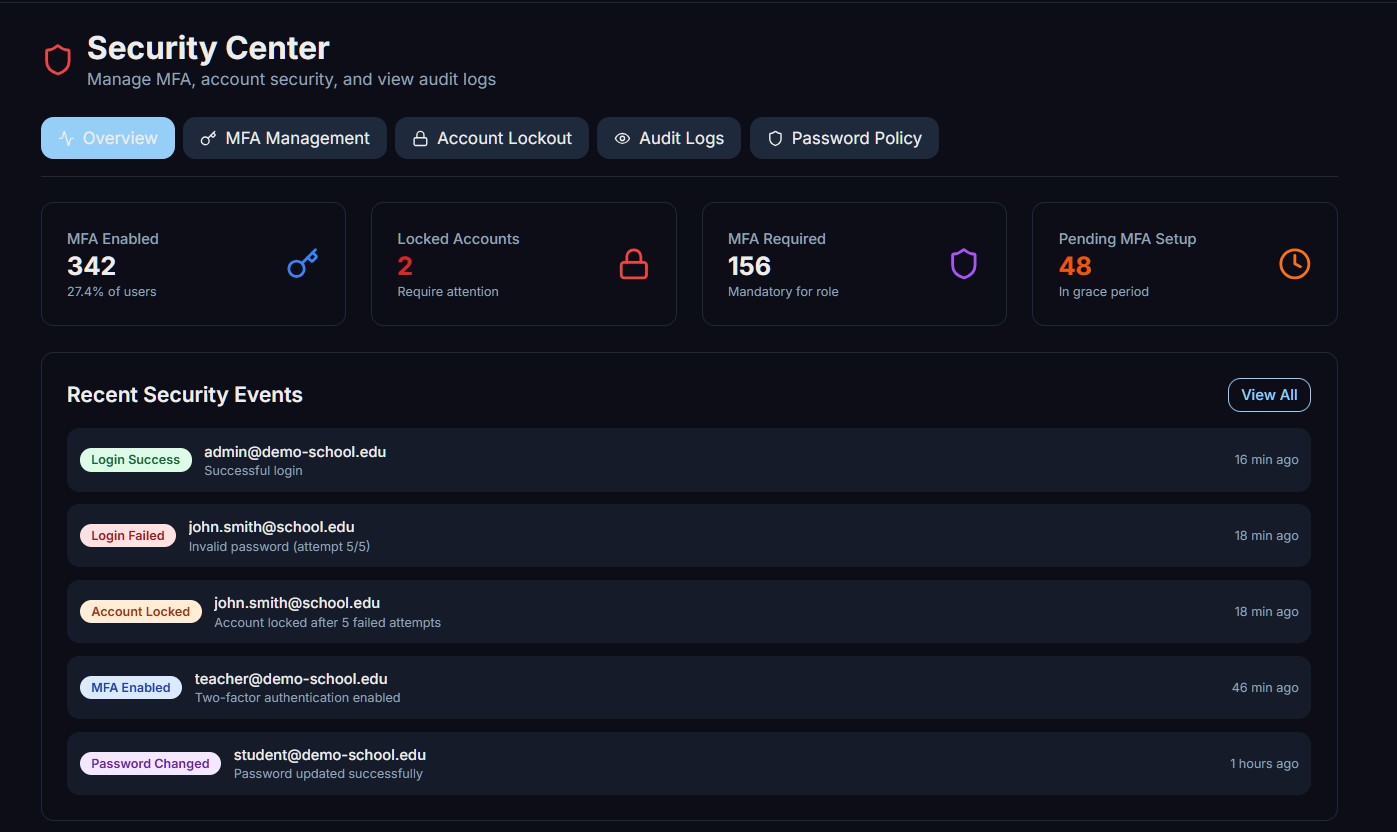
School administrator reviewing EdTech vendor security documentation

10 Fragen an EdTech-Anbieter nach PowerSchool-Leck

Nach dem PowerSchool-Datenleck, das Millionen von Schülern betraf, müssen Schulen EdTech-Anbieter prüfen. 10 wichtige Sicherheitsfragen.

In December 2024, PowerSchool suffered a massive data breach that exposed the personal information of approximately 62.4 million students and 9.5 million educators across North America (BleepingComputer, 2025). The breach happened because of a single compromised employee credential and a lack of multi-factor authentication on a critical support portal (TechTarget, 2025). Privacy regulators have since emphasised that schools bear responsibility for vetting their vendors' security practices.

Continue reading "10 Fragen an EdTech-Anbieter nach PowerSchool-Leck" →
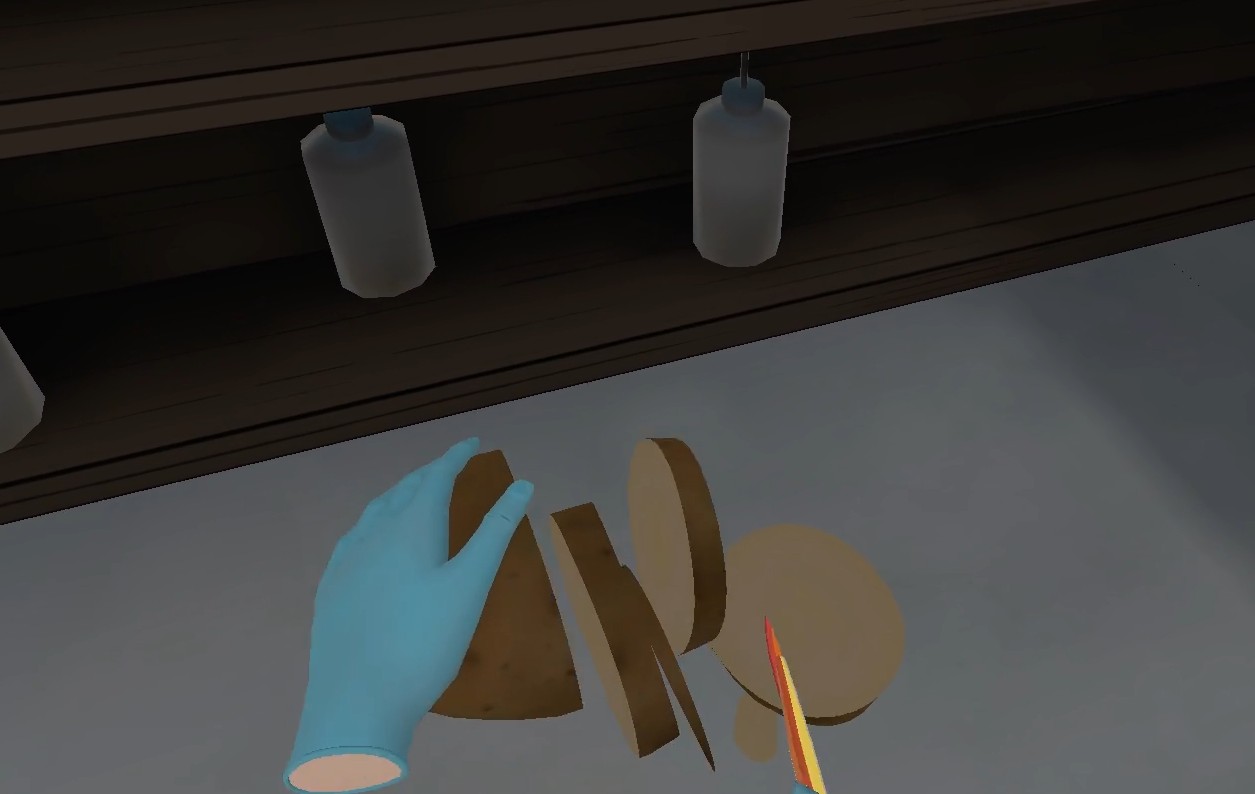
Student performing practical assessment in virtual lab, in this example the student is cutting a potato for use with microbiology experiments

KI-Erkennung funktioniert nicht. Prozessbasierte Bewertung schon.

82% der Pädagogen befürchten KI-Betrug, doch Erkennungstools versagen. Prozessbasierte praktische Bewertung bietet einen besseren Weg.

In December 2025, Pearson published a finding that surprised nobody who works in education: 82% of educators are concerned about students using GenAI to complete assignments. The institutional response has been predictable. Detection tools, surveillance software, and policies treating AI as something to catch and punish.

Continue reading "KI-Erkennung funktioniert nicht. Prozessbasiert..." →
WhimsyLabs running on multiple devices including Chromebook, desktop, and VR headset

VR-Winter? Warum Web-First Labore die Kluge Wahl Sind

Schulen brauchen zuverlässige EdTech unabhängig von Hardware-Zyklen. Web-First virtuelle Labore sind die nachhaltige Wahl.

Recent headlines have sent ripples through the education technology sector: Meta has reportedly cut around 10% of its Reality Labs workforce (UploadVR, 2026), the VR market shrank 12% in 2024 marking the third consecutive year of decline (CNBC, 2026), and industry analysts are now using phrases like "VR winter" to describe the current market conditions. For schools that invested heavily in VR hardware for science education, these developments raise uncomfortable questions about sustainability and future support.

Continue reading "VR-Winter? Warum Web-First Labore die Kluge Wah..." →
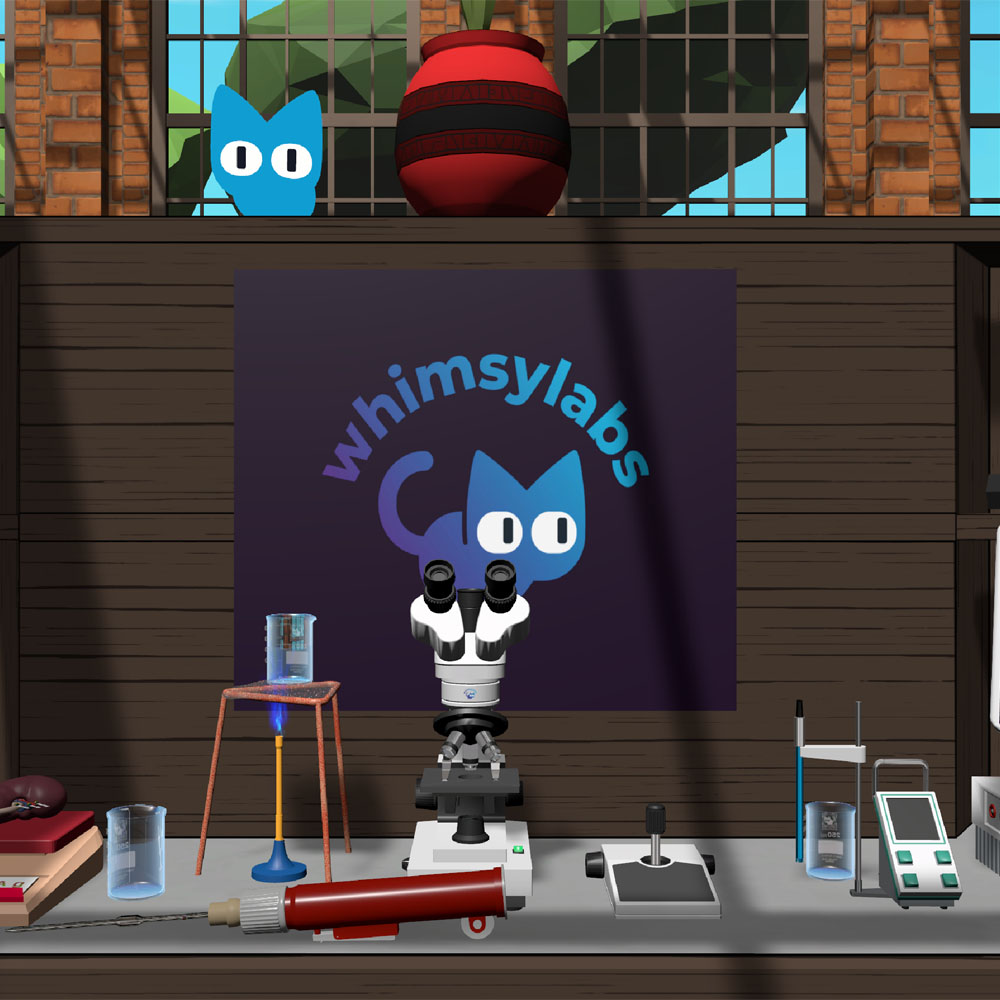
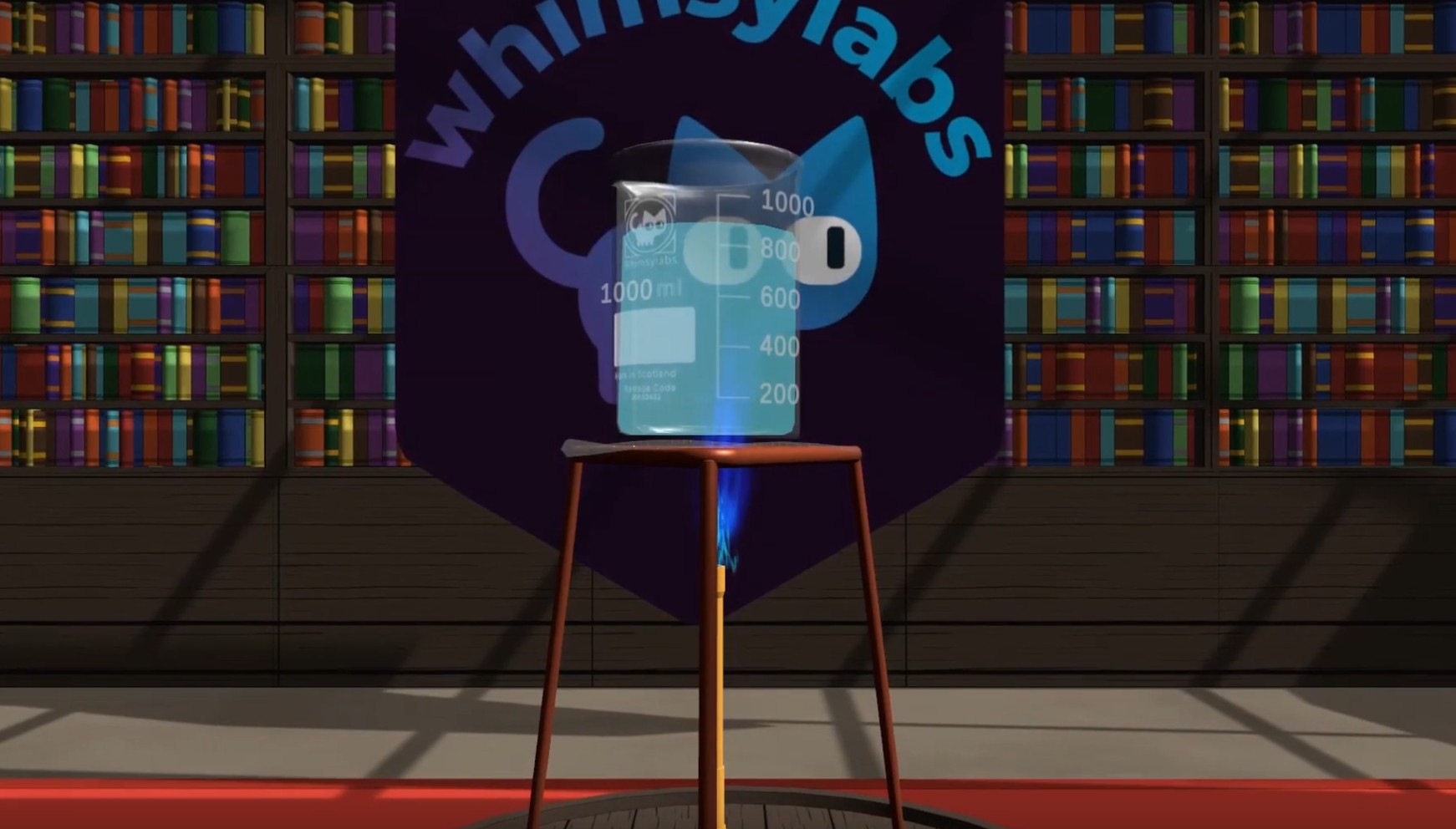
WhimsyLabs virtual laboratory showing a microscope, pH meter, pipette pump, scale with kidney, and beaker being heated over a Bunsen burner while WhimsyCat observes from above

Warum andere virtuelle Labore scheitern

Warum skriptbasierte virtuelle Labore keine echten Fähigkeiten vermitteln und wie die Physik-Engine von WhimsyLabs authentisches MINT-Lernen ermöglicht.

Despite the rapid adoption of educational technology, a significant gap remains between virtual simulation and physical reality. Recent audits suggest that while 82% of institutions use some form of virtual laboratory software, over 65% of university professors report that first-year students lack essential practical skills, often attributing this to the "game-like" nature of preparatory software (Accettone et al., 2023). Authentic scientific inquiry requires more than watching an animation; it requires the chaotic, noisy, and unforgiving nature of the real world.

Continue reading "Warum andere virtuelle Labore scheitern" →
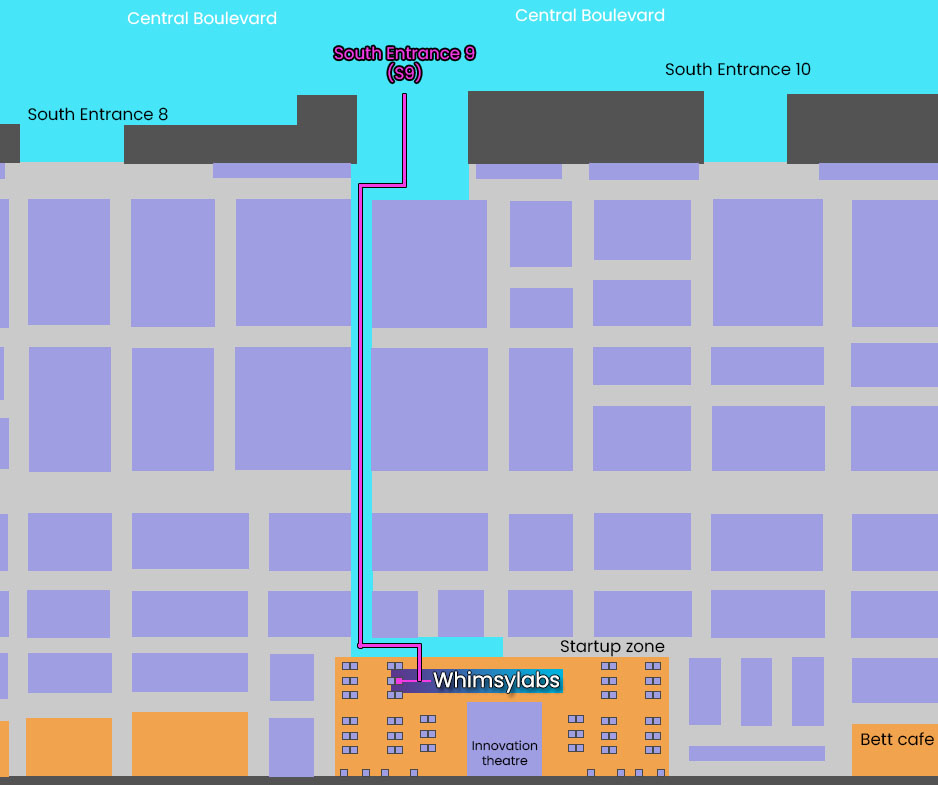
Map to WhimsyLabs booth at Bett exhibition

Bett 2026: WhimsyLabs lädt Sie nach London ein

WhimsyLabs kehrt zur Bett UK 2026 in die Startup Zone zurück, um unsere preisgekrönte virtuelle Laborplattform zu präsentieren. Besuchen Sie uns am Stand FS10.

I'm thrilled to announce that WhimsyLabs will be returning to Bett UK in January 2026! After our incredible experience at Bett 2025 where we won recognition from the Kids Judge Bett award, we're heading back to ExCel London to showcase what we've been building! This time, we'll be in the Startup Zone at stand FS10 in the South Stand, and I genuinely cannot wait to meet educators, students, and fellow innovators who share our passion for transforming STEM education.

Continue reading "Bett 2026: WhimsyLabs lädt Sie nach London ein" →
WhimsyCat AI tutor with various cosmetic outfits

Gamification: Punkte, Belohnungen und kreativer Ausdruck

WhimsyLabs' nicht-monetarisiertes Gamification-System mit Punkten, Belohnungen und Kunstkreation stärkt soziale Verbindungen.

Gamification in education, applying game design elements to learning contexts, can increase student engagement by up to 48% when implemented thoughtfully (Sailer & Homner, 2023). However, poorly designed gamification often prioritizes superficial rewards over meaningful learning, creates unhealthy competition, or introduces monetization that creates pay-to-win dynamics. WhimsyLabs has pioneered a comprehensive, non-monetized gamification system that drives genuine engagement through intrinsic motivation while fostering school social networks rather than replacing them. Our approach combines points for assessments, personalized weekly recommendations, cosmetic rewards including WhimsyCat customization, lab personalization options, creative expression through our art department, and social features that encourage peer connection and support.

Continue reading "Gamification: Punkte, Belohnungen und kreativer..." →

Echtzeit-Physiksimulationen: Dynamisches Lernen macht Spaß

Entdecken Sie, wie WhimsyLabs' Echtzeit-Physik die weltweit ausgefeilteste virtuelle Laborplattform mit Gaming-Prinzipien schafft.

Traditional academic simulations run on supercomputers and require hours or days to model seconds of real-world chemical reactions (Foster & Kesselman, 2003). WhimsyLabs has achieved what competitors deemed impossible: real-time physics simulations running on basic consumer hardware that are sophisticated enough for genuine scientific learning yet optimized enough to feel responsive and fun. This technical breakthrough: combining computational fluid dynamics, molecular interaction modeling, and gaming engine optimization, is why WhimsyLabs is by far the most sophisticated virtual laboratory platform available, and critically, one students genuinely enjoy using.

Continue reading "Echtzeit-Physiksimulationen: Dynamisches Lernen..." →

VR bereitet Studierende auf MINT-Karrieren vor

Erfahren Sie, wie WhimsyLabs authentische Laborbewegungen und Designfähigkeiten durch Sandbox-Freiheit und Flüssigkeitsphysik lehrt.

50-60% of employers report that science graduates lack essential practical laboratory skills, despite completing degree programs with traditional lab components (Anderson et al., 2021). The problem? Traditional education teaches students what to do in laboratories but fails to develop the physical muscle memory, procedural fluency, and experimental design capabilities that professional science demands. WhimsyLabs is the only virtual laboratory platform in the world that addresses this critical gap by teaching authentic physical movements through high-fidelity VR interaction and providing complete sandbox freedom for experimental design, skills that transfer directly to professional STEM careers.

Continue reading "VR bereitet Studierende auf MINT-Karrieren vor" →
Whimsylabs virtual lab demonstrating chemical hazard handling with safety labels on chemical containers

Virtuelle vs. Physische Labore: Kosten-Nutzen-Analyse

Umfassender Kosten-Nutzen-Vergleich: Physische Labore vs. WhimsyLabs' virtuelle Lösung für demokratisierte MINT-Bildung.

A single traditional chemistry laboratory setup costs UK schools £25,000-£70,000 for initial equipment, with ongoing annual costs of £5,000-15,000 for consumables, maintenance, and safety compliance (CLEAPSS, 2024). A single fume cupboard alone costs £6,000-£8,300, while class sets of quality microscopes can exceed £5,000 (SLS Education, 2025). For under-resourced schools, these costs are prohibitive, and the situation is worsening. According to EngineeringUK research, 27% of UK science teachers report their schools cannot afford the equipment needed for practical lessons, while 26% say they simply don't have enough equipment (EngineeringUK, 2024). WhimsyLabs offers a transformative alternative: unlimited virtual laboratory access at a fraction of traditional costs. Critically, as an impact-focused company rather than a profit-driven company, our mission is democratizing STEM education worldwide, not maximizing shareholder returns. This comprehensive cost-benefit analysis demonstrates how virtual laboratories deliver superior educational and financial outcomes while advancing educational equity.

Continue reading "Virtuelle vs. Physische Labore: Kosten-Nutzen-A..." →
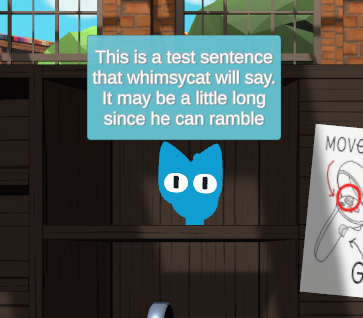
WhimsyCat AI tutor displaying a test message to demonstrate its communication capabilities

Emotionale KI: WhimsyCat erkennt Schüler-Frustration

Erfahren Sie, wie WhimsyCats Frustrations-Erkennung Aktionen und Blickmuster überwacht, um proaktive Unterstützung zu bieten.

Research shows that negative emotions like frustration are strongly negatively correlated with academic performance, with frustrated students experiencing significantly worse learning outcomes (Educational Psychology Review, 2025). Traditional classrooms struggle to identify struggling students quickly enough to intervene before frustration becomes disengagement. WhimsyCat, WhimsyLabs' advanced AI tutor, pioneers a revolutionary approach: detecting frustration in real-time through multi-modal analysis of player actions, gaze patterns, and engagement behaviors, then providing immediate, empathetic support that prevents learning breakdowns before they occur. One example of this is students shaking virtual beakers in frustration when experiments go wrong: by looking at the vector of the beaker you can infer if it was an accident, or an expression of frustration.

Continue reading "Emotionale KI: WhimsyCat erkennt Schüler-Frustr..." →
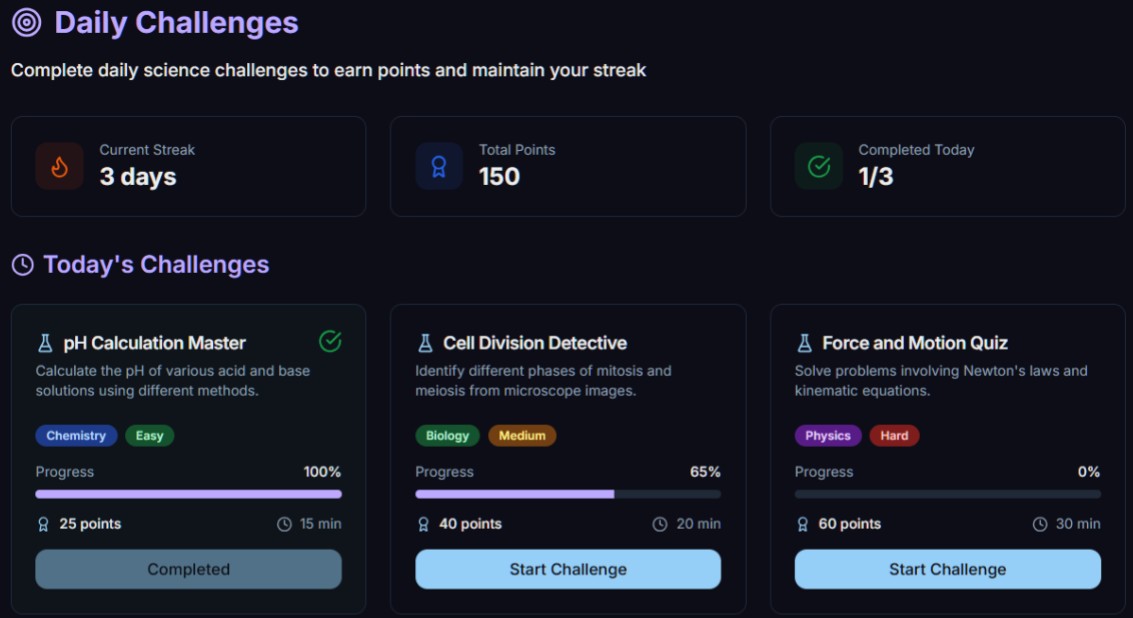
Student dashboard showing the challenges section with personalized lab recommendations

24/7 KI-Nachhilfe: Personalisierte Empfehlungen für Schüler

Erfahren Sie, wie WhimsyLabs' KI-Laborempfehlungen Schülern helfen, ihre Schwächen durch gamifizierte Übungen zu meistern.

When students miss even a single class, even catching up can be challenging for model students.Research shows that 58% of students who fall behind in STEM subjects never fully recover (STAAR results, 2025). Whether due to illness, emergencies, or simply struggling with a complex concept, traditional classroom models offer limited opportunities for personalized catch-up support. WhimsyLabs solves this critical challenge through 24/7 AI tutoring combined with intelligent daily and weekly lab recommendations that target each student's specific weaknesses, providing unlimited low-stakes practice opportunities with gamified rewards that make skill development genuinely engaging.

Continue reading "24/7 KI-Nachhilfe: Personalisierte Empfehlungen..." →
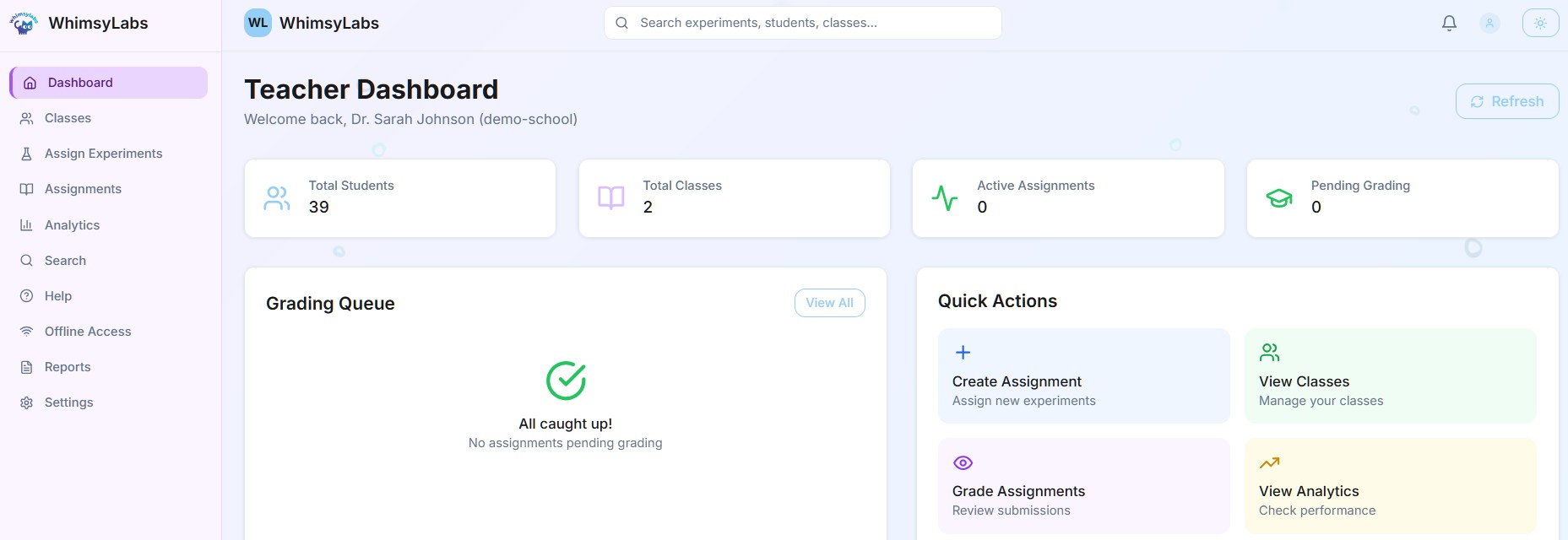
Teacher dashboard in light mode

Virtuelle Labore lösen MINT-Lehrermangel: UK & Global

Erfahren Sie, wie WhimsyLabs' KI-Labore den MINT-Lehrkräftemangel durch 24/7-Nachhilfe und automatisierte Bewertung lösen.

The UK faces a catastrophic STEM teacher shortage, with only 50% of the 26,360 secondary trainees needed recruited in 2022/23, while physics recruitment hit just 17.3% of targets (UK Parliament Education Committee, 2024). This crisis extends globally, with 48 countries reporting STEM teacher shortages and approximately 30% of teachers leaving within their first five years (Adams et al., 2025). WhimsyLabs, based in Edinburgh, UK, but serving schools worldwide, offers a transformative solution through AI-powered virtual laboratories that provide 24/7 intelligent tutoring and automated assessment, dramatically reducing teacher workload while improving learning outcomes.

Continue reading "Virtuelle Labore lösen MINT-Lehrermangel: UK & ..." →
Virtual lab experiment showing sustainability

Grüne Labore: Nachhaltigkeit in der MINT-Bildung

Erfahren Sie, wie WhimsyLabs' virtuelle Labore die Umweltkrise in der Bildung angehen und Nachhaltigkeitsziele vorantreiben.

Traditional science laboratories carry a hidden environmental cost that few consider when discussing STEM education. Physical laboratories are responsible for 60-65% of a university's total energy consumption and produce an estimated 5.5 million tonnes of plastic waste annually, making them among the most resource-intensive educational environments (Urbinati et al., 2024). As educational institutions worldwide commit to carbon neutrality and sustainable practices, the environmental impact of laboratory-based learning has become impossible to ignore.

WhimsyLabs offers a transformative solution to this sustainability challenge through our fully virtual laboratory platform. By eliminating the need for physical chemicals, single-use plastics, energy-intensive equipment, and hazardous waste disposal, our virtual labs dramatically reduce the environmental footprint of science education while maintaining, and in many ways exceeding, the educational effectiveness of traditional laboratories.

Continue reading "Grüne Labore: Nachhaltigkeit in der MINT-Bildung" →
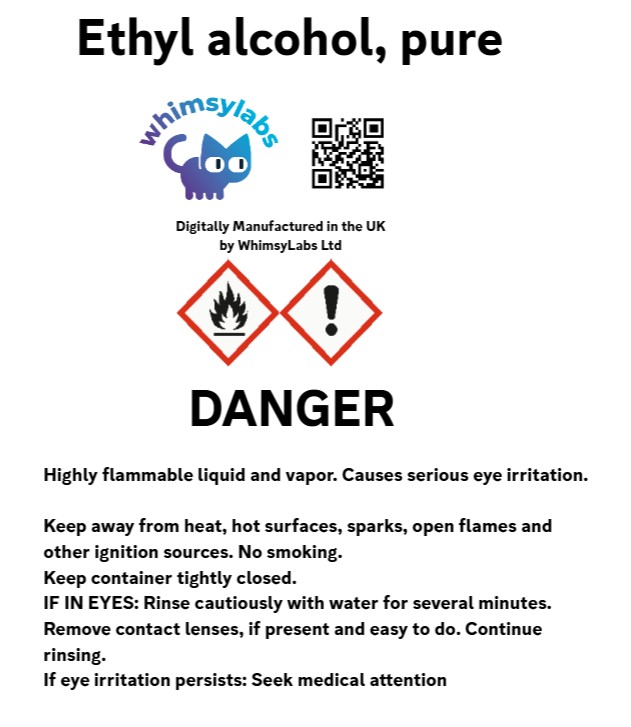
A student boiling ethanol, very dangerous!

Sandbox-Lernen: Warum Scheitern für STEM wesentlich ist

Erfahren Sie, wie WhimsyLabs' offener Ansatz die MINT-Bildung transformiert, indem Scheitern als Lernwerkzeug genutzt wird.

Traditional science education often follows a rigid, step-by-step approach where students are guided through carefully controlled experiments with predetermined outcomes. While this methodology ensures consistent results, it fundamentally misrepresents how real science works. Authentic scientific discovery is messy, iterative, and frequently involves productive failure. According to research published in Learning: Research and Practice, students who experience and learn from failure through productive failure approaches develop stronger problem-solving skills and greater resilience than those who follow only successful paths (Kapur, 2015).

WhimsyLabs has pioneered a fundamentally different approach to science education through our sandbox learning philosophy. Unlike conventional virtual labs that restrict students to predetermined pathways, our platform provides complete experimental freedom with infinite possible equipment permutations and unlimited procedural pathways. This open-ended environment allows students to design their own experiments, make authentic choices, and, most importantly, learn from their mistakes in a safe, consequence-free setting.

Continue reading "Sandbox-Lernen: Warum Scheitern für STEM wesent..." →
whimsycat!

WhimsyCat: Der KI-Tutor für wissenschaftliche Bildung

Erfahren Sie, wie WhimsyLabs' KI-Tutor personalisierte Anleitung, Echtzeit-Feedback und adaptive Lernwege für Schüler bietet.

With classroom ratios often exceeding 30:1, teachers simply cannot offer the individual attention each student needs during complex experimental procedures. According to systematic reviews of AI applications in education, the ability to provide personalized learning experiences that cater to unique learning styles and preferences is one of the key advantages of intelligent tutoring systems in addressing educational challenges (Hwang et al., 2023).

WhimsyLabs addresses this challenge through WhimsyCat, the most sophisticated AI tutor in virtual laboratory education, delivering unparalleled personalized guidance, real-time feedback, and adaptive learning pathways. Unlike basic educational AI systems that simply answer questions, WhimsyCat represents a breakthrough in proactive learning support, actively monitoring student actions, predicting potential errors before they occur, and delivering contextual guidance with industry-leading precision.

Continue reading "WhimsyCat: Der KI-Tutor für wissenschaftliche B..." →
Teacher grading dashboard

WhimsyLabs' KI-Virtuelle Labore lösen Bildungskrise

WhimsyLabs kombiniert KI-Bewertung, Physiksimulationen und Sandbox-Lernen, um wissenschaftliche Bildung global zu demokratisieren.

The global science education landscape faces unprecedented challenges, with over 50% of students in low-income countries failing to achieve basic science proficiency according to UNESCO data. In the UK alone, 57% of science teachers report inadequate funding prevents them from running practical lessons, while the country faces a staggering £1.5 billion annual cost due to STEM talent shortages (UK Parliament POST, 2023). These statistics highlight a critical need for innovative solutions that can democratize access to high-quality science education globally.

WhimsyLabs addresses this crisis through a groundbreaking virtual laboratory platform that combines advanced AI assessment tools, realistic physics simulations, and sandbox learning environments. Unlike traditional virtual labs that restrict students to predetermined pathways, our platform enables genuine discovery-based learning with complete experimental freedom. Research demonstrates that such interactive, three-dimensional learning environments significantly improve spatial understanding and long-term retention compared to traditional textbook-based approaches (Lewis et al., 2014).

Continue reading "WhimsyLabs' KI-Virtuelle Labore lösen Bildungsk..." →
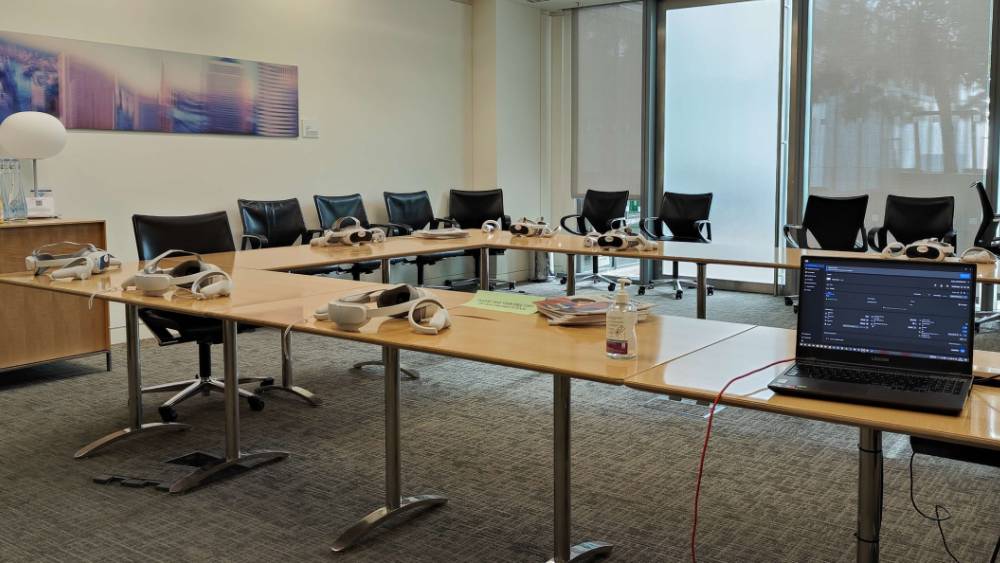
Participants engaging with the WhimsyLabs kidney dissection at Barclays Headquarters

Virtuelle Nierensektion für SEND-Studierende

Wie Whimsylabs' virtuelle Interaktion Bildungsergebnisse und Engagement für Studierende mit besonderen Bedürfnissen verbessert.

The human kidney plays a vital role in maintaining homeostasis,filtering blood, balancing fluids and electrolytes, and removing waste. The kidneys process approximately 180 liters of filtrate daily, demonstrating the remarkable efficiency of these complex organs (Hall, 2015). Yet for many, the complexity of its internal structures can make it difficult to fully grasp how it functions. WhimsyLabs' cutting-edge virtual reality platform tackles this challenge through our industry-leading kidney dissection simulation, featuring advanced physically interactive dissection tools and sophisticated microscope simulation technology unmatched in the educational market.

Continue reading "Virtuelle Nierensektion für SEND-Studierende" →
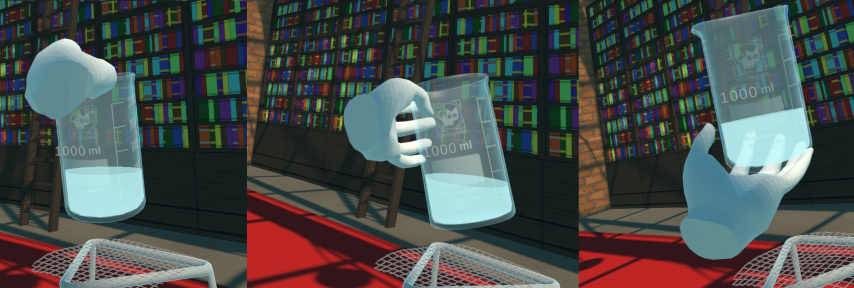
360 hand grab wowee

Physikalität in Virtuellen Laboren: Jenseits Simulationen

Entdecken sie, wie Whimsylabs bahnbrechende Flüssigkeitsphysik und Verfahrensschulung die wissenschaftliche Bildung neu definiert.

Research indicates that traditional computer-based simulations often fail to engage students meaningfully, as they lack the authentic decision-making and problem-solving experiences of real laboratory work (de Jong et al., 2013). Most existing virtual lab solutions act as glorified animations or guided walkthroughs, restricting students to predetermined steps rather than allowing them to experiment freely. This fundamental limitation prevents students from developing the authentic procedural skills and muscle memory essential for real-world laboratory work.

Continue reading "Physikalität in Virtuellen Laboren: Jenseits Si..." →
First mockup lab

Whimsylabs Geschichte: Von Bescheidenen Anfängen zu BETT 2025

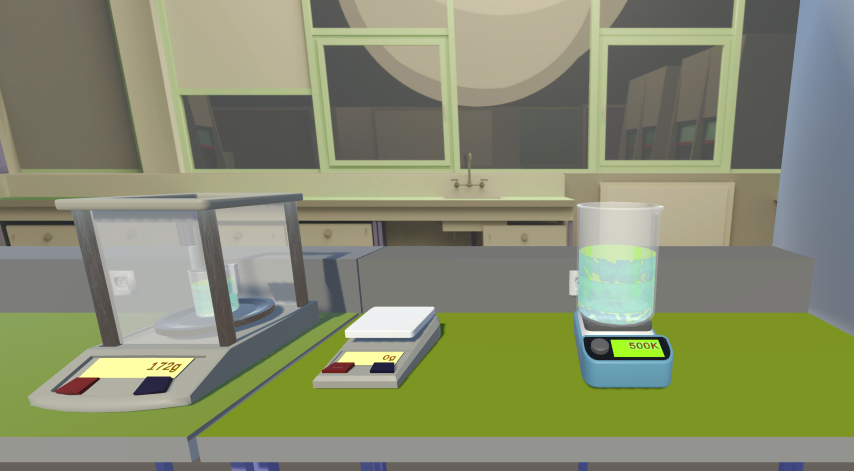
Erfahren Sie, wie Whimsylabs MINT-Herausforderungen mit simulierten Laboren, Partnerschaften und preisgekrönter Innovation angeht.

In 2023, the UK plummeted to 15th place in global science rankings (OECD, 2023), while the pandemic left millions of students worldwide without hands-on lab access for years (Grewenig et al., 2021). This perfect storm of declining STEM performance and infrastructure loss catalyzed the creation of Whimsylabs in 2020, founded by Marisa French during her Physics PhD. For Marisa, this crisis felt deeply personal; she had been inspired to pursue science through the hands-on practicals she experienced in secondary school, opportunities that were now disappearing for a new generation.

Continue reading "Whimsylabs Geschichte: Von Bescheidenen Anfänge..." →