Accessible Science Practicals for SEND Students

Every pupil deserves a place at the bench. WhimsyLabs virtual labs let SEND students carry out real practical science themselves — self-paced, safe, and built accessible from the start.

Book a Demo for Your SEND Department

Why Do SEND Students Miss Out on Science Practicals?

Because the physical lab itself is the barrier. A standard school laboratory is built around fixed-height benches, open flames, glassware, scalpels, and reagents, all used under time pressure in a noisy, crowded room. A pupil who uses a wheelchair, has a hand tremor, feels anxious around fire, or is overwhelmed by sensory load can be excluded from the very activity that defines the subject. The most common “adjustment” is to let them watch while a partner or the teacher does the experiment — which quietly removes them from the learning.

This sits on top of a wider decline in hands-on science. The Royal Society and EngineeringUK Science Education Tracker found that regular practical work for GCSE pupils fell from 44% in 2016 to 26% in 2023, with video demonstrations increasingly standing in for experiments pupils once did themselves. When demonstrations replace doing, the pupils who lose the most are those already least able to take part. Read more in our analysis of the 2026 SEND White Paper and science practicals.

Adjusting the focus of a simulated microscope in the WhimsyLabs virtual lab

How Do Virtual Labs Remove Those Barriers?

By taking the physical hazards and the fixed pace out of the practical while keeping the science intact. In WhimsyLabs there is no flame to fear, no glassware to drop, and no single speed the whole class must keep. A pupil can repeat a titration as many times as they need, slow a dissection down to follow each step, or return to an experiment later without the sensory overload of a busy laboratory.

Crucially, the content is not simplified. The full dissection or titration covers the same detail as a real lab session — it is the delivery that adapts, not the curriculum. Pupils choose the equipment, make the decisions, encounter unexpected results, and learn from their own mistakes, instead of watching someone else do it. Explore the full WhimsyLabs feature set to see how the simulation works.

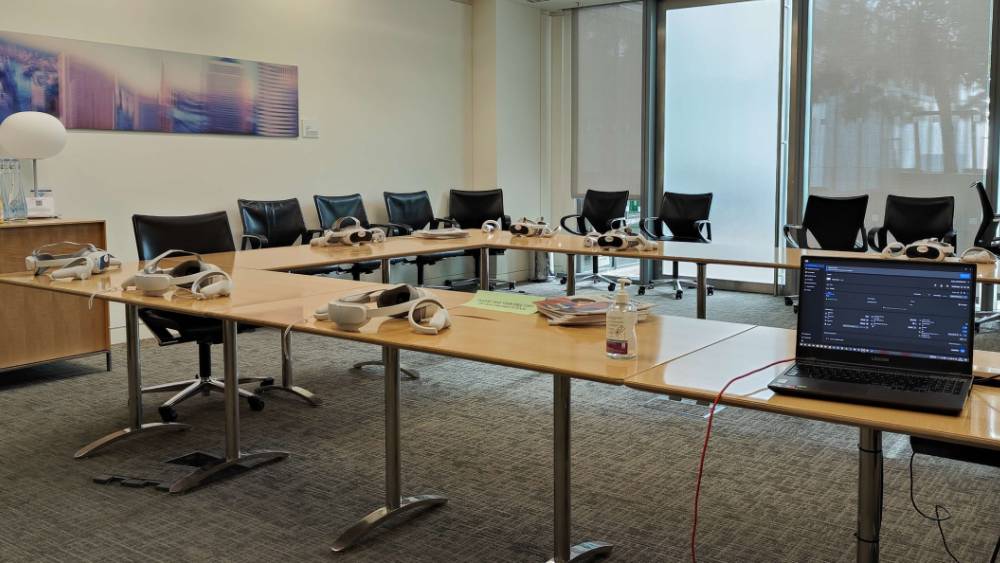
Participants carrying out the WhimsyLabs virtual kidney dissection at a public demonstration

What Accessibility Features Does WhimsyLabs Include?

WhimsyLabs was designed for SEND learners from the start rather than retrofitted afterwards. The core accessibility features are:

  • Full control remapping — every input can be reassigned, so pupils using adapted keyboards, switches, or one-handed setups can run the same practicals as everyone else.
  • Text-to-speech — instructions and feedback can be read aloud, supporting pupils with dyslexia, visual impairment, or reading difficulties.
  • Self-paced modes — no timer and no class pace to keep up with; pupils can focus on one step at a time and take breaks when they need them.
  • Unlimited repetition at no cost — repeating a practical consumes no reagents or specimens, so practising a technique five times costs the same as once.
  • No physical safety barriers — no open flames, sharps, or hazardous chemicals, removing the risk assessments that so often end with a pupil observing instead of participating.
  • Low-bandwidth mode — keeps lessons running smoothly on unstable school internet connections, so access does not depend on infrastructure.

It runs in the browser on the Chromebooks schools already own, as well as on VR headsets, Macs, and PCs.

Does This Actually Work for SEND Learners? A Real Example

Our virtual kidney dissection has been demonstrated publicly, including at Barclays Headquarters as part of a kidney health and organ donation awareness campaign. Attendees from a wide range of backgrounds physically manipulated a virtual scalpel, made incisions in virtual tissue, followed blood through the renal artery and nephrons, and examined structures under a simulated microscope — the same anatomical detail as a real dissection, delivered through an interface anyone could use.

Teachers have reported that students with attention or processing challenges benefit from being able to focus on one step at a time, repeat complex actions, and receive feedback through movement and audio cues. Combining physical movement with visual and auditory input creates a scaffolded experience that adapts to diverse learning profiles — read the full story in our virtual kidney dissection and SEND engagement case study.

What Does the 2026 SEND White Paper Change?

In February 2026 the government published its schools White Paper, Every Child Achieving and Thriving. According to the House of Commons Library’s summary, Education, Health and Care Plans are to be reserved for children with the most complex needs, while every other pupil with identified SEND receives a statutory digital Individual Support Plan held by their mainstream school — backed by a £1.6 billion Inclusive Mainstream Fund and a £1.8 billion “Experts at Hand” service.

For science departments this means evidencing, pupil by pupil, how each child took part in each practical, what adjustment made that possible, and what progress followed. From September 2026, Ofsted has confirmed that inclusion runs through every inspection rather than sitting in a separate box. WhimsyLabs’ process-based assessment logs every action a pupil takes — equipment chosen, steps performed, technique over time — giving SENCOs and science leads a documented evidence trail for Individual Support Plans as a by-product of the lesson itself.

How Can SEND Leads Fund Virtual Labs?

Through budgets most schools already hold. Accessible practical science is a legitimate use of Pupil Premium and SEN budgets, and the White Paper’s £1.6 billion Inclusive Mainstream Fund gives school leaders a further budget line that accessible, evidence-generating tools can draw on. See our guide to UK school funding routes for how to put a pilot together.

Give Every Pupil a Place at the Bench

See how WhimsyLabs works for your SEND cohort — from control remapping to the evidence trail for Individual Support Plans.

Book a Demo