If you teach science in a UK school, you've probably wished you had more budget for lab equipment. The Royal Society Partnership Grants scheme gives schools up to £3,000 to run investigative STEM projects with VR science labs, and we want to help you get one. We'll provide free access to WhimsyLabs VR lab software as part of your project, help you write the application, and support you through the whole process.
What Are Royal Society Partnership Grants?
The Royal Society runs a grant programme that funds hands-on STEM projects in UK schools. The idea is simple: your school partners with a working scientist (from a university or industry), and together you run an investigative project with your students. The Royal Society provides up to £3,000 to cover equipment and materials.
The key details:
- Up to £3,000 in STEM funding for equipment, materials, and your STEM partner's travel costs
- Students aged 5 to 18 can take part
- Projects must be investigative, meaning students answer a real research question (not just follow a recipe)
- You need a STEM partner from a university, research institute, or industry
- Three application windows per year, so you have multiple chances to apply
Schools have used these grants for everything from DNA analysis kits to weather stations. VR science labs are one of the newer and more popular uses of the funding.
Why Use VR Science Labs in Schools?
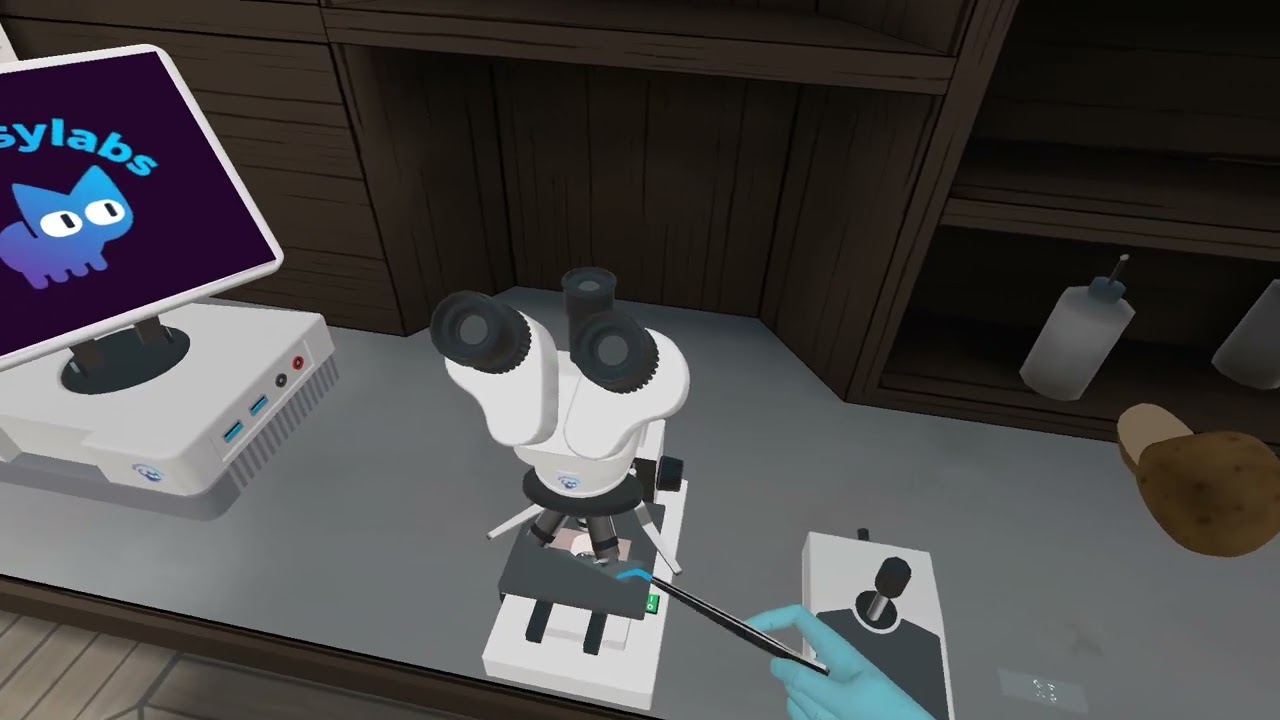
With VR, students don't just read about experiments or watch videos. They actually do them. They pipette solutions, observe reactions, and make measurements in a physics-accurate virtual lab environment. A few reasons schools are choosing VR science labs:
- Students can repeat experiments as many times as they need without using up consumables
- Hazardous procedures become safe to practise (no real chemicals, no real risk)
- Built-in AI assessment spots technique errors as students work and gives them feedback
- Research backs it up: a 2024 critical review in Frontiers in Psychology (Lin et al.) found that VR boosts student engagement and motivation in classroom settings
- Every student can take part, including those with physical disabilities who might struggle in a traditional lab
The grant pays for VR headsets. WhimsyLabs provides the VR lab software for free. Your students get a complete virtual science lab without the school spending a penny on software licences.
See WhimsyLabs VR science lab in action
2026 Royal Society Grant Application Dates
Applications for 2026 open on 23 February 2026. There are three deadlines throughout the year:
- 30 April 2026 (spring round, for projects starting in the autumn term)
- 10 July 2026 (summer round, for winter term start)
- 30 November 2026 (autumn round, for spring term projects)
If you start planning now, you'll have plenty of time to find a STEM partner and put together a solid application for the first deadline.
How WhimsyLabs Helps You Get STEM Funding
We've set up a dedicated Royal Society Partnership Grants support page because we genuinely want more schools to succeed with these applications. Here's what we offer:
Free VR Science Lab Software
If you get the grant, you get free access to WhimsyLabs for your entire project. All of your grant money goes toward headsets and partner costs, not software. We'll also give you a free demo for your application so you can show grant reviewers exactly what students will be using.
Help Writing Your Grant Application
If you've never applied for a grant before, don't worry. We can help you explain the educational case for VR science labs, suggest project structures that fit the Royal Society's criteria, and look over your draft before you submit it.
Finding a STEM Partner
You need a STEM partner for the grant: someone working in research or industry (not a teacher or outreach officer). If you don't already know someone, we can put you in touch with university researchers who are keen to work with schools.
Designing Your VR Science Project
We'll help you plan an investigation that works well in VR and meets the Royal Society's requirements. That might be testing how different variables affect titration accuracy, comparing student technique in VR versus a physical lab, or something else entirely. We'll figure it out together.
Teacher Training and Ongoing Support
We provide full teacher training on WhimsyLabs and stick around for technical support throughout the project. If something isn't working or you need help, we're there.
What Can Royal Society Grant Funding Cover?
The grant is mainly for equipment and materials. A typical budget for a VR science lab project:
- VR headsets (£2,000 to £2,500): enough Quest 3 devices for a class set
- STEM partner expenses (up to £200): travel costs for school visits
- Physical materials: anything you need for the real-world side of your investigation
- Celebration event: a showcase where students present their findings
One thing to know: the grant can't be used to buy products or services from your STEM partner (conflict of interest rules). That's another reason WhimsyLabs provides VR lab software free of charge. There's no conflict with the grant terms.
Who Is Eligible for Royal Society Partnership Grants?
Most UK state-funded schools can apply. The main requirements:
- UK state-funded school (including academies and free schools)
- Students aged 5 to 18
- You can find a STEM partner (someone in research or industry, not primarily in education or outreach)
- Your project is investigative: students are answering a research question
- You haven't had a Partnership Grant in the last two years
Private and international schools aren't eligible for this particular scheme, unfortunately. We're looking into grant opportunities in other countries though. Check our funding support page for updates.
VR Science Lab Project Ideas
Not sure what to investigate? Here are some projects that work well with WhimsyLabs:
Chemistry
- How do different variables (temperature, concentration, technique) affect titration accuracy?
- Do students develop better lab technique faster in VR or in a physical lab?
- Can students design their own reaction protocols and test them safely in VR?
Physics
- Investigating forces and motion through repeatable virtual experiments
- How accurately do physics simulations match real-world measurements?
- What factors affect measurement precision, and can VR help students improve?
Biology
- Training dissection technique in VR before (or instead of) using physical specimens
- Comparing what students learn from virtual versus physical dissections
- Making lab work accessible for students who can't participate in traditional practical sessions
Apply for Your Royal Society Partnership Grant
The 2026 application window opens on 23 February. If this sounds like it could work for your school, now is a good time to start thinking about it.
Head over to our Royal Society Partnership Grants page to learn more and get in touch. We'll help you from start to finish: finding a STEM partner, writing the application, running the project, and reporting back to the Royal Society.
£3,000 for VR headsets plus free WhimsyLabs VR science lab software. It's a solid opportunity for any UK school, and we'd love to help yours take advantage of it.
Reference:
- Lin, X. P., Li, B. B., Yao, Z. N., Yang, Z., & Zhang, M. (2024). The impact of virtual reality on student engagement in the classroom: A critical review of the literature. Frontiers in Psychology, 15, 1360574. https://doi.org/10.3389/fpsyg.2024.1360574
- The Royal Society. (2026). Partnership Grants. https://royalsociety.org/grants/partnership-grants/